News Story
Finding the Flow: The Senior Capstone Journey

By Jackson Foard
Oh, to be a senior. Seniors run the show. They run the culture. They run things in general. This is no different in the civil engineering department. But their impact is not limited to the social realm; they guide innovation, too, through their capstone projects. And while everyone loves to get lost in the technical details, the conversation deserves to be brought back around to the social element, the human element, of this process. They are seniors, after all.
Armed with seven questions, I sat down with a handful of teams to gain insight into their trials and tribulations. Let me take you on a journey through the civil engineering capstone experience.
The First Steps
Fall of senior year. The beginning of the end. The beginning of capstone. Teams formed and project ideas were finalized. Zoe Barbour was unique in that she sculpted her project idea, centered on expanding the trail network at Gunpowder Falls State Park, from the ground up. The process required many cold calls to the Department of Natural Resources. “If you have an idea you are excited about, don’t be afraid to pursue it,” Zoe says.
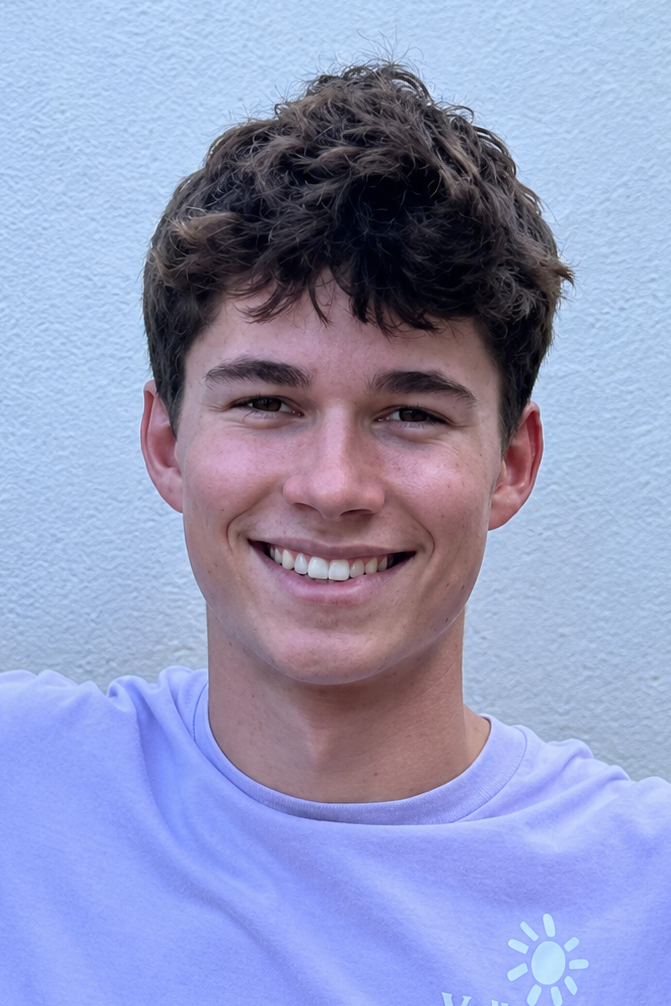
Jackson Foard
The Fears
I ask what fears existed at the beginning of the project. The resounding answer is fear of the unknown, fear of working through the phase where nobody knows what to do. Thomas Martin recalls his words at the start of the project: “I have no clue how we get from where we are to where we want to be.” In the midst of this unknown, images of failure presented themselves. “I was scared that if push came to shove I would just fail,” Vimukthi (Vim) Jayalal recalls. Doubts lingering, the teams moved from fall, the conceptualization phase, into winter and spring.
The Friction
Michael Ongango’s project used vision-language models for traffic incident recognition. During the winter, Michael poured in countless hours, experimenting with many different models. “Everything I did during that time amounted to nothing,” he laments with a smile. Nevertheless, Michael says, he gained critical experience and knowledge that would serve his team well for the rest of the project as they entered the marathon of the project phase in the spring.
A near unanimous regret for the teams is not having been more proactive with communication. Ariyan Aghamiri, who is on Michael’s team, recommends talking to stakeholders earlier in the semester. David Oloye nods in agreement: “grill them.” On another team, Eric Vanhorn offers the advice of asking questions early and requesting answers as soon as you can. Caleb Withers seconds this. “The biggest hurdle is getting information," he says. "We were told to wait. Don’t wait.”
“Nobody has a clue about what they are doing until they do it. You inevitably will figure it out. It’s about finding faith in yourself in the face of fear.”
Thomas Martin, 2026 graduate, civil and environmental engineering
The Flow
Spring pushed on, and teams began to find their groove. For Sara Busch, this moment came early on a Saturday morning, when she awoke to the sound of her phone ringing. Of course, the caller was a key contact her team was working with to distribute a survey. “I jumped out of bed to get pen and paper” and handled the cold call with composure, she recalls.
For Anthony Terselic, big technical challenges were on the table. It was time to design a new foundation for a mining complex in Western Maryland. Anthony, who led the structural effort, was understandably nervous to put forth a design. His teammate Graham Elmore weighs in: “actually saying ‘spend millions of dollars on a design’ is different than on an exam.” Anthony says he relied on professors and professionals in the industry to generate a design. “I was able to build up some confidence through input,” he recalls.
Caleb Baer remembers the dynamic of his group in the beginning: “we were just four dudes writing a paper.” There was no good chance for collaboration because the work was divided among sections of a report. This changed as they neared their community engagement meeting. They discuss their anxiety going into the meeting: not only did they have no idea of what to expect, but the presentation they submitted changed at the last minute. “I was freaking out,” laughs Caleb. Connor Troy smiles: “but onwards, upwards.” After holding a successful meeting and securing the contours of the site, the team was able to “start rolling,” agrees Tristan Mullaney.
Kay Guildener and her team designed washpads for the UMD golf course. They arrived for their second site visit on golf carts, convinced the site was inaccessible by car. Even after discovering they could have just driven there, they headed back in the carts with high spirits. Floricel Buencamino suggested they decide on a team name. Vim smiles, recalling the great team name he came up with, Washing Machine, because they were operating like a machine pumping out drawings for the washpads. “There is still no official team name,” Vim admits, “but that’s what I’m calling it for now.”
The Final Thoughts
At the end of each interview, I ask teams to share with me an important detail of their project that would otherwise go unseen. For Will and his team, the unseen impacts of legacy mines need more attention. Will explains that there are a number of facilities in the middle of nowhere dedicated to reducing the environmental risks of abandoned mining sites. The Maryland Department of the Environment has little funding to manage these facilities. Graham has personal ties to his project, as he has kayaked the branch of the Potomac that the stream they are treating flows into. Thomas agrees, “our project is bringing the spotlight on something that nobody ever sees because it is back out in the sticks.”
Helen Mengistu and her team point to the restorative justice element of their project, which was to develop a lot in Lakeland into an affordable home. Lakeland, they explain, was established in the 1890s as a Black community. In the 1970s, the City of College Park’s urban renewal plan demolished Lakeland homes, permanently displacing two thirds of the community. The students’ project contributed to the restorative justice initiatives in Lakeland. “There was value in learning about the history of Lakeland. It feels like it got shoved under the rug,” Helen confirms.
At the end of the semester, when the laptops have closed, each team stepped back and looked at the project they had delivered. Despite facing overwhelming challenges and uncertainties at the beginning of the year, every group and individual found success. Thomas Martin reflects, “nobody has a clue about what they are doing until they do it. You inevitably will figure it out. It’s about finding faith in yourself in the face of fear.”
Author’s Note: A huge thank you to all of the seniors who took the time to talk with me. Additionally, thanks to Dr. Isabella Kolar, Dr. Natasha Andrade, Dr. Robert Herschbach, and Dr. Nii Attoh-Okine for their support on this project.
About Jackson Foard
Jackson Foard is a rising junior in civil and environmental engineering with a focus on geotechnical and structural engineering. An honors student and recipient of a Dan Waldo Scholarship, he is a member of the American Society of Civil Engineers student chapter and is active on the Steel Bridge team. He enjoys designing models in CAD and exploring various aspects of urban design. Jackson wrote this piece as part of a personal project assignment for the UMD University Honors course HNUH300, Vantage Point Seminar.
Published May 27, 2026
Recent Stories
Stories / Oct 14, 2026
Suyue Cao: “Forever Chemicals” Need Not Be Forever

Stories / Oct 12, 2026
Yang Takes the Helm at Maryland Transportation Institute

Stories / Oct 5, 2026
Celebrating LGBTQ+ History Month 2026

Stories / Sep 22, 2026
Two Years Running, Maryland #12 Among Publics for Undergrad...

Stories / Sep 15, 2026
Chicago’s Perennial Potholes: UMD Professor Weighs In

Stories / Sep 10, 2026
Early Engagement

Stories / Aug 5, 2026
White Earth Tribal and Community College Hosts UMD Engineers

Stories / Aug 5, 2026
Search Open for Faculty in Water Resources Engineering

Stories / Aug 2, 2026
Celebrating Our 2026 Graduates

Stories / Jul 16, 2026
2026 Best Doctoral Research Award: Kaitai Yang
